























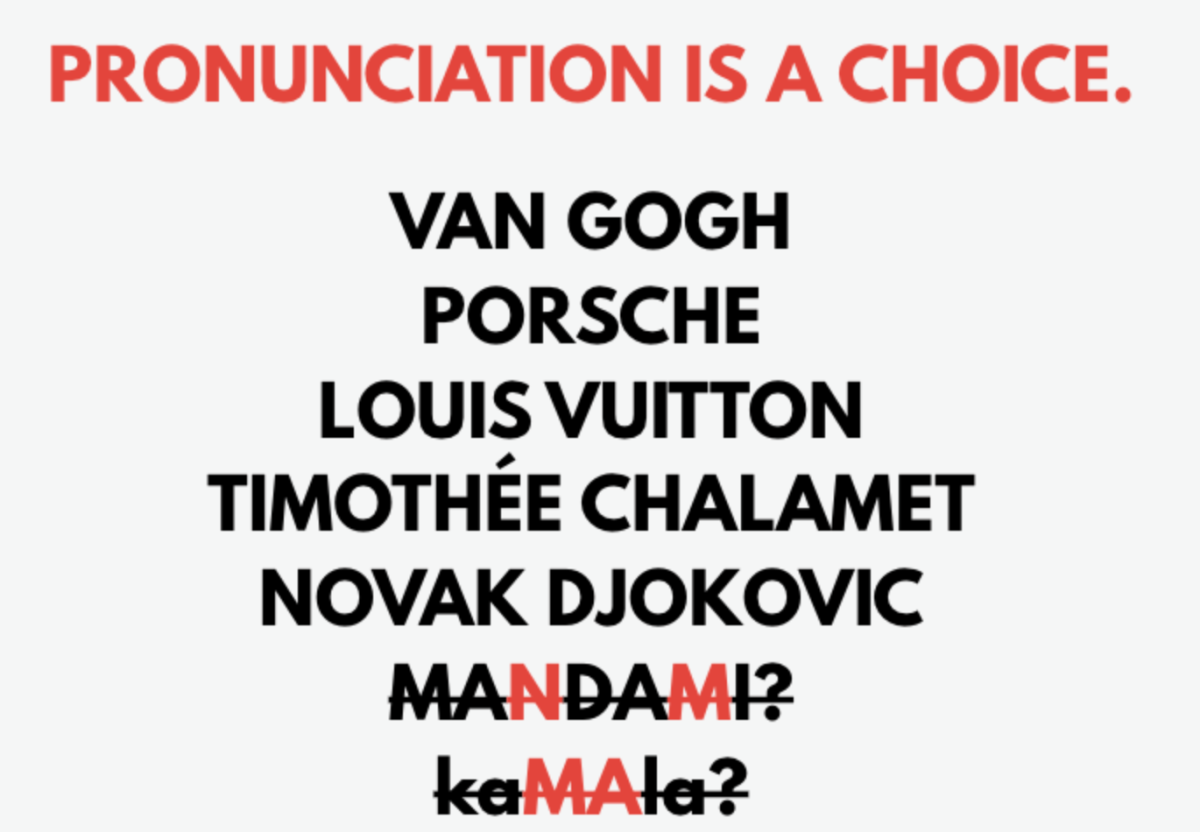
We live in a society that embraces the challenge of certain “foreign” names. We learn about Michelangelo in art class, Tchaikovsky in music or the Treaty of Versailles in history. In Westport, people drive Porsches to order their açai bowls at GG & Joes. Millions of people become diehard fans of characters like Hermione Granger and Daenerys Targaryen. We see these names as marks of sophistication and make a point to practice them until they stick.
But when a name belongs to a political opponent of color, that willingness evaporates.
For instance, as of this past fall, the New York Times documented how New York mayoral candidate Zohran Mamdani has been repeatedly addressed as “Mandani,” “Mandami” or simply “the assemblyman” by former New York governor Andrew M. Cuomo in multiple different settings. Mamdani noted these instances not as a linguistic challenge but blatant prejudice, stating in an interview that “Andrew Cuomo never struggles with names like John Catsimatidis…But somehow Mamdani is too difficult.”
This ineptitude transcends the difficulties of pronunciation, and delves into the conscious ranking of whose names are considered worth the effort. This lack of effort has become weaponized as a political strategy against minority politicians. The dismissal of their identities is not a mistake, but a message. Politicians continue to deliberately mock or mispronounce names to cast opponents as perpetual foreigners, un-American and burdensome. It’s a way to dismiss their legitimacy without engaging with their policies. For instance, during a CNN panel in August 2024, South Carolina’s Republican representative Nancy Mace mispronounced Vice President Kamala Harris’ name. When called out by other panelists, Mace stated, “I will say Kamala’s name any way that I want to.” Mace’s defiance was a public performance of disrespect, a refusal to grant a political opponent the basic dignity of their own identity.
This weaponization packs two punches. For one, it demeans the individual personally, reducing their rich cultural heritage and legacy to make a political statement. Secondly, it sends a glaring and malicious message to the rest of the country about the candidate. When millions of people watch a congresswoman or former governor treat a name with contempt, it normalizes that contempt in our communities. It signals that disrespecting the identity of a woman of color or a child of immigrants is politically acceptable, even commendable.
The foundation of the issue lies in the pattern of selective practice, an unconscious bias that dictates which names we grant the dignity of effort.
Calling this out isn’t about “political correctness” but about confronting a long-standing form of prejudice. We’ve been conditioned to treat it as something insignificant. It is not. Refusing to say someone’s name correctly is about power and maintaining a social hierarchy. It’s a modern repacking of an old American weapon. In the past, the U.S. government ripped away the sacred names of Native-American children at places like the Carlisle Indian Industrial School to sever them from their culture. Today, politicians use mispronunciation to mark minority opponents as perpetual outsiders. Unless we name and reject this tactic, we allow a culture where anyone with an ethnic name can be told, in a thousands of subtle and unsubtle ways, that they do not belong.
Continuous failure to correctly pronounce names is inexcusable and insufficient in actively dismantling the pattern of selective practice. It requires a conscious decision to grant every name the same respect we effortlessly give to the names of European artists, luxury cars and fictional characters. It’s a call for all of us to examine our own biases. It’s about recognizing that the gap between mastering “Versailles” and a person of color’s name is one of respect. It’s time to actively commit to the inclusion that everyone seems to believe they champion, where no one has to fight to be correctly called by their own name.