































Your ankles begin to feel itchy and you discover rashes all over your skin. Maybe you start to develop a fever and headache. The cause of these symptoms: ticks.
Over the past month, the tick population in Connecticut has been increasing rapidly. Although scientists typically expect this spike to happen in May, June, October or November, the results came sooner than expected this year. This season, ticks began popping up mid April. Emergency hospital visits because of ticks are at the highest rate of this year since 2017.
Dr. Goudarz Molaei, a research scientist at Connecticut’s Agricultural Experiment Station’s testing program, claimed that a colder winter would cease tick populations from increasing. Contrary to his belief, the opposite happened.
“Considering this is just the beginning of higher tick activity and we haven’t reached the peak, this number is quite disconcerting,” Molaei said.
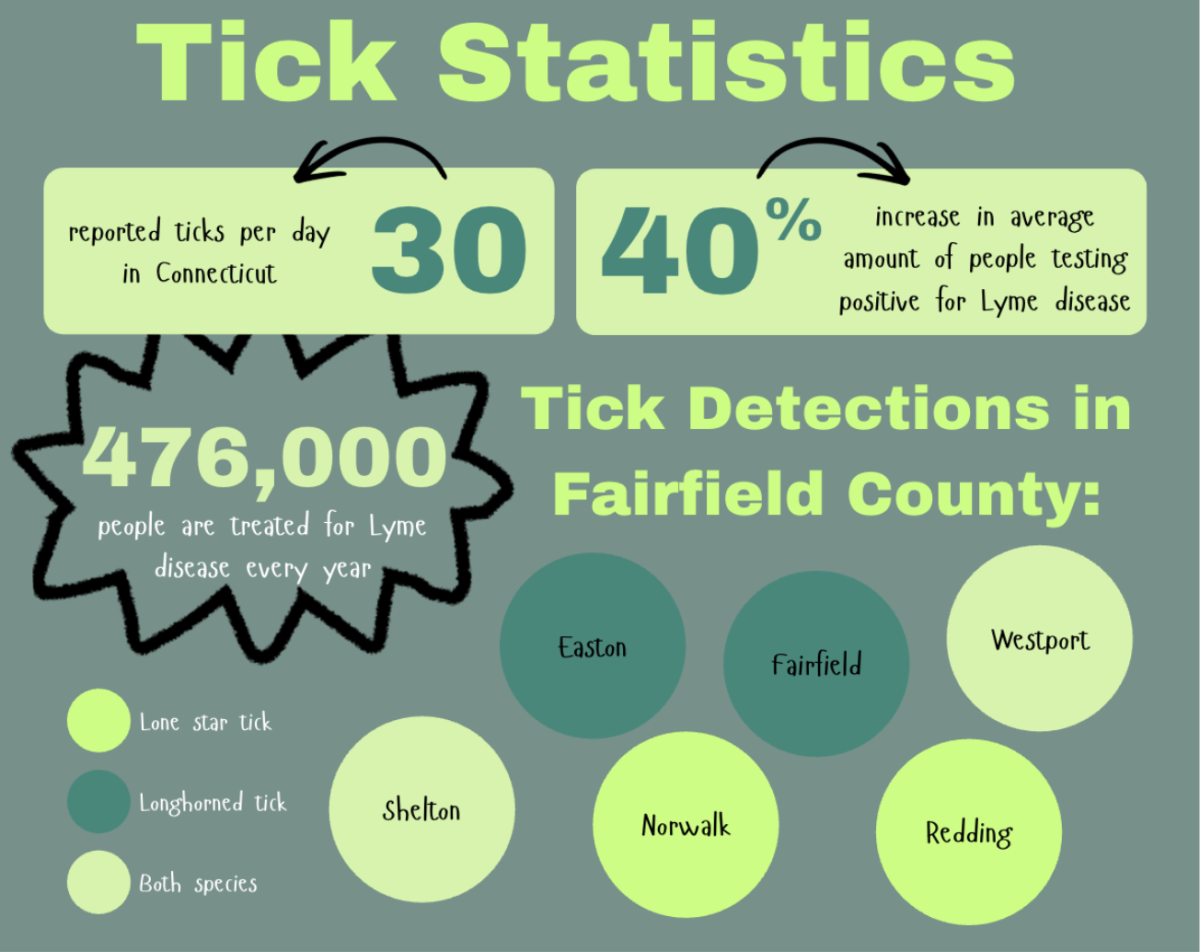
Over 100 tick submissions typically means peak activity for ticks. In Connecticut, more than 100 submissions were reached earlier than in previous years. Residents have been reporting an average of 30 ticks per day.
Adding to the unusualness, many different species have been spotted; ones that aren’t usually present in Connecticut. Longhorned ticks, known for their fast reproductive system, have been seen in Fairfield, Middlesex, New Haven and New London. Additionally, the lone star tick has been spotted in these counties too as well as in Windham. The lone star tick, however, has had more people worried.
Vanessa Overgard ’27 has already witnessed her dogs constantly being bitten by ticks early on this season.
“[The lone star tick] bit my dog and she’s allergic to red meat,” Overgard said. “Now, [my dog] gets really sick when she eats [meat] and gets hives all over her body.”
One of Staples’ nurses, Anna Fitzpatrick, says this is because of the Alpha-gal syndrome caused by the lone star tick. If you are bitten, this syndrome causes you to develop an intense allergy to not just red meat, but dairy as well.
“Ticks can carry and transmit many different illnesses,” Fitzpatrick said. “Many of these illnesses have long term effects. This is why it is important to remove all ticks immediately.”
The most commonly known illness from a tick bite is Lyme disease. This month, there has been a 40% higher than average amount of people who have been testing positive for Lyme disease. According to the CDC, there are 476,000 people treated to it per year.
Although this isn’t seen very often, Fitzpatrick said that students and teachers will occasionally come in with ticks. She explains the typical procedural measures taken if this occurs.
“We remove the tick by pulling straight up with tweezers per guidelines and clean the area thoroughly,” Fitzpatrick said. “We advise students/staff to watch for rash, fever, muscle aches and any other flu-like symptoms. We would refer them to their pediatrician or primary care physician for further guidance.”
Scientists have been studying the sudden increase in tick populations more thoroughly this year. Although it usually takes many months for them to see any changes in tick populations, they have linked it closely with an increase in mice and deer population, as it makes it easier for ticks to feed on them. Additionally, climate change plays a big role as well. Because ticks favor warmer and more humid weather, they are more likely to thrive in hotter temperatures.
“Temperature, humidity, vegetation [and] habitat type […] are changing as the result of climate change,” Molaei said. “We do see the impact of […] all these factors in tick population, and, further, in the prevalence of infection.”
However, being bitten by ticks is something that can be avoided if you take the correct precautions. When going outdoors, it’s best to use bug spray or tick repellent. It also helps to walk in the middle of pathways, avoid enclosed forest areas and wear lighter-colored clothing.
“You need to check your body for ticks or ask a parent if you can’t see,” Fitzpatrick said. “You should shower immediately. It is important to wear repellent with 25% DEET and wear long pants tucked into socks if you are hiking or walking through wooded or grassy areas.”