






























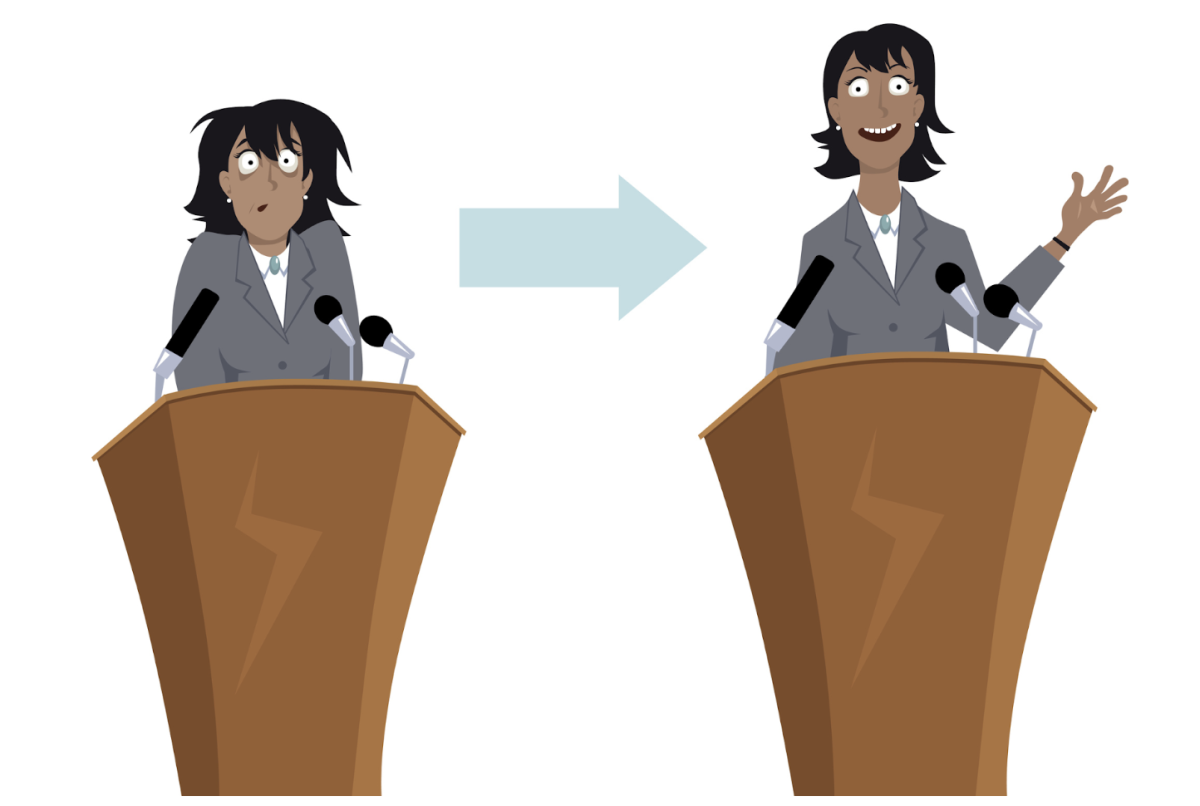
All eyes are on you, your heart is beating and your mind is screaming. You stand behind the podium and for a few minutes, you control the room. This is Rhetoric and Persuasion. Sound terrifying? Well, I’m not gonna lie to you, it is. But that’s what makes it so unlike any other class at Staples. It forces you to step out of your comfort zone and the class eventually teaches you how to turn your nerves into fuel and become the speaker you have always aspired to be.
Around 75% of the population fears public speaking, and rightfully so. But this means most of your classmates are sweating right with you. You are all bound to stumble, stutter and make mistakes and that is unfamiliar when most of your school career has been memorizing answers perfectly. However, public speaking is a skill. Like any skill, it improves with practice, feedback and a willingness to fail (and maybe even laugh at yourself along the way). Every great speaker you’ve witnessed, whether a local Board of Ed member, politician or lawyer was once exactly where you are.
Public speaking isn’t a school requirement you can escape after high school; it’s an essential real world skill. Approximately three fourths of workers have to engage in some form of public speaking at their jobs. In nearly every career and social situation, your ability to communicate clearly and confidently determines whether your ideas are heard and acted upon. You can have the strongest argument in the world, the best research and the smartest solution, but if you can’t communicate it, it doesn’t matter. Rhetoric and Persuasion gives you the tools to make your ideas count, especially in a world with limited attention spans. Communication skills also show up in interviews, leadership roles and class discussions, so this isn’t just relevant for juniors and seniors but invaluable.
By the end of the semester, I noticed a huge difference in my ability. I wasn’t just standing up and speaking hoping for the best, but leading my audience through my ideas. I still got nerves– unfortunately those don’t just disappear–but I gained a confidence that comes from knowing what I’m doing and that mistakes aren’t disasters. By no means is my journey as a speaker perfect, but I am so glad I had the opportunity to discover I can command a room and even enjoy the process along the way, So yes, standing in front of a room is terrifying. But facing that fear, embracing the mistakes along the way and learning to keep going turns you into a compelling speaker who people want to listen to, which I believe is a skill worth every bit of sweat.

