







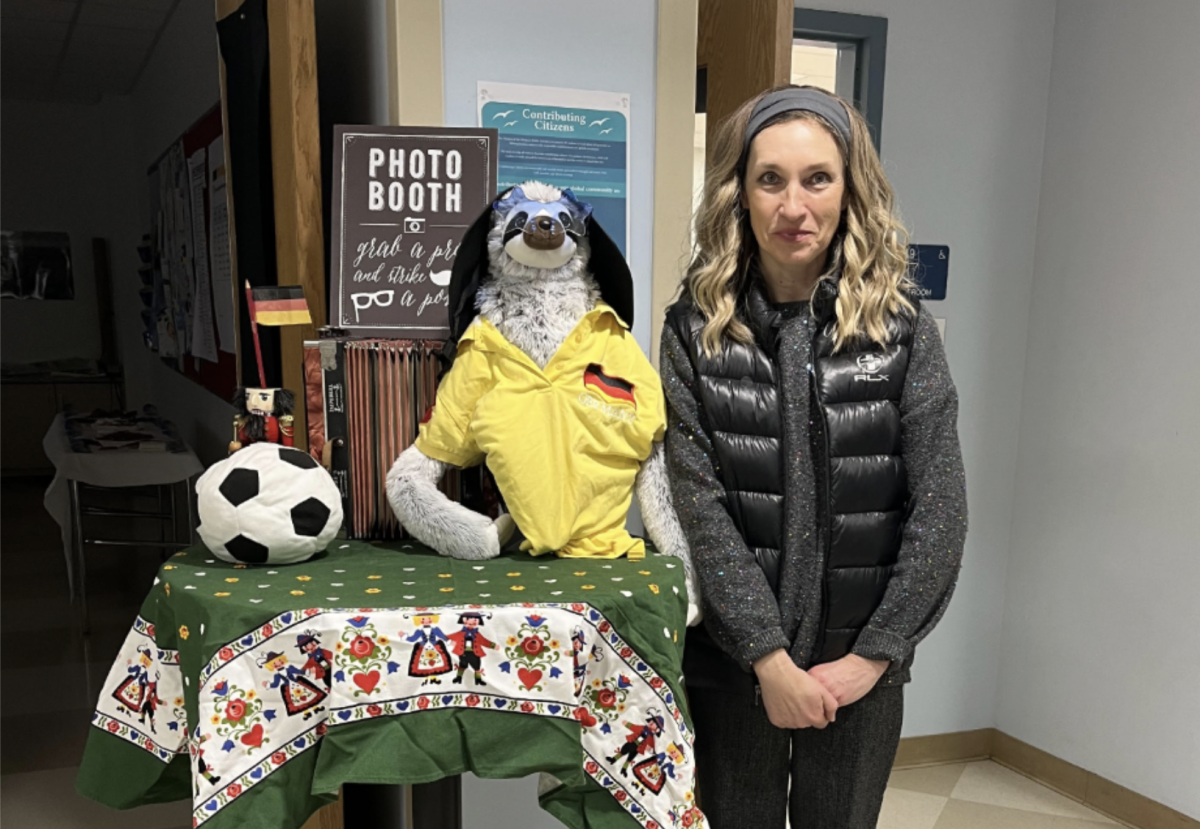





















For most students, a field trip means a break from regular classes and a rare chance of fun during school hours. For the German language class and Ms. Ulianova, it meant an opportunity of a lifetime for the students.
On Oct. 17, the German class at Staples went to New York City to visit the Goethe Institute. Named after famous German poet, Johann Wolfgang von Goethe, the institute was created in 1997 by the German federal republic as a way to promote German language and culture worldwide.
Made for cultural immersion, the institute offers language classes and hosts cultural events. This year, Staples visit was organized by the German consulate; students were able to speak with representatives from German universities and discover the many paths language can take them professionally. Students played various cultural games, won prizes, listened to speakers and were even offered refreshments and snacks.
“I honestly had a really amazing experience because I felt so much more informed about the opportunities to learn or to study abroad in Germany,” German student Josephine Lewertoff ’27 stated. “Especially as a junior this was very relevant to me as I’m kind of starting my college search.”
According to the Sycamore School, more than 90% of students past high school have lost the ability to claim any of the languages they studied. The issue of making students engaged and motivated to truly learn and stick with a language is one the language department has been trying to find a solution to. Most students tend to “learn” the language quiz by quiz and feel no real connection or permanence to what they are being taught. One possible solution is through real life engagement like the Goethe field trip.
“[The speakers] showed them how German led them to get internships and jobs, showing the practical activation of the language,” Ms. Ulianova, the German teacher at Staples said.
Projects Abroad US states that one of the best ways to consume and learn a language is through pure immersion. Whether it’s through travel or through work, putting yourself in an environment where you are surrounded by a certain language both motivates and “forces” you to learn the tricky intricacies that may be overlooked in classrooms.
By students becoming aware of the possibilities of being multilingual and the broader chances of education and employment, the drive to take their language class can increase exponentially.
“I sometimes see students getting tired of language because they don’t have a real life connection to it. It kills motivation because they don’t feel the passion,” Ms.Ulianova said. “These field trips are a burst of energy, it gives them a meaning to why they’re doing this. I think field trips open a window for the classroom to see, ‘Where are we going? What’s the destination?’”

