















At the 2026 Grammy Awards ceremony, one thing became extremely clear. No, it was not that Sabrina Carpenter got robbed, or that Heidi Klum’s dress was questionable. It was that TikTok has officially become the music industry’s most powerful hub for fame.
Many of this year’s artists did not rise through record labels, like most Grammy winning artists in the past. Instead, they gained popularity through TikTok, where users tap a heart shaped icon, share sounds, and repost clips to interact with an artist’s music and even personal posts .
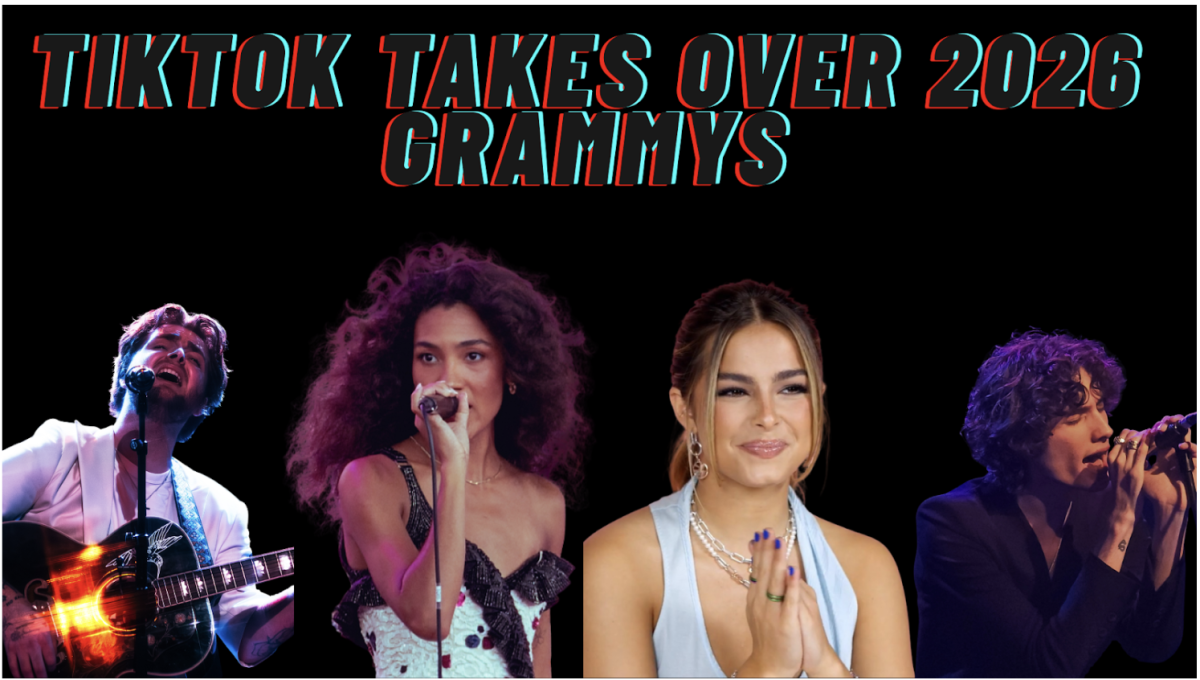
The shift was especially noticeable at the 2026 Grammy Awards. A total of eight artists who gained popularity through TikTok artists were Addison Rae, Alex Warren, Olivia Dean, Sombr and Lola Young. Of these known Tiktok-related musicians, all performed, and two ultimately won awards.
The Best New Artist award is defined as “an artist whose eligibility-period release(s) achieved a breakthrough into the public consciousness and notably impacted the musical landscape.” At the 2026 Grammys, this award was given to Olivia Dean whose rise was fueled largely by her popularity on TikTok. In 2025, that breakthrough often came from going viral online.
Last year, Tiktok partnered with Luminate, a data-analysis company, to find data on the influence Tiktok has on the music industry. The report found that 84% of songs on Billboard’s Global 200 first gained momentum from the app itself. The report also shows that Tiktok users are 74% more likely to discover and share new music compared to other social media apps.
Several performers at the ceremony reflected this similar trend.
Dean had one of the most successful nights by far. She won Best New Artist, and performed her hit song “Man I Need” at the award ceremony. Her 2025 album “The Art Of Loving,” gained attention after her song “Man I need” was used in over 1.7 million TikTok videos, helping her reach a wider audience. The London-born singer-songwriter, of Jamaican-Guyanese and English descent, is widely known for her soul-pop style, producing a similar elegance voice to classic musicians, like Amy Winehouse and Aretha Franklin.
Lola Young was the second TikTok-related musician to win an award at the ceremony, earning Best Pop Solo Performance for her hit song “Messy.” The British songwriters song gained major attention after U.S influencers like Sofie Richie Grainge and Jake Shane posted videos to the song and has since appeared in over 1.3 million TikTok videos.
Addison Rae, who first became famous as a TikTok creator in 2020 and now has 88.3 million followers, performed “Fame is a Gun” from her album titled “Addison,” at the awards. Although she did not win, her appearance and nomination showed how social media influences can successfully transition into music careers, performing at one of the most prestigious music award ceremonies.
Alex Warren performed after rising to fame on TikTok with his girlfriend, Kovour Annon, where they posted their journey from homelessness to fame and success. With 19.9 million followers, he built a massive audience online, through his involvement in the viral TikTok group, Hype House, before earning a Grammy nomination for “Best New Artist” following the success of his hit song “Ordinary.” “Ordinary” spent 10 weeks at No.1 on the Billboard Hot 100, which was one of the longest times in history, and continued to lead the radio song charts. Although he did not win, losing to Olvia Dean, his performance and nomination marked a major milestone in his career
Sombr performed as well, but he did not win. His early hit, “Caroline” went viral on TikTok in 2022, which led to a record deal. His later songs kept trending online because of the release of his 2025 debut album “I Barely Know Her.”
All together, these musicians showed TikTok’s growing impact on the music industry and how the Grammys are increasingly seeing nominees who gained fame through the app of TikTok. Instead of relying solely on record deals and connections, artists can now build careers by posting videos, sharing their songs and encouraging other users to create content with their audio.